

People do not seek tyranny. They seek stability, safety, predictability, and relief from uncertainty. In times of crisis, these requests seem reasonable and even responsible. The real threat isn’t in what is asked for but in what is actually given up in return.
Initially, stability is voluntary. Participation is seen as cooperation. A form is filled out. A credential is verified. A condition is accepted to keep moving forward. Nothing feels permanent. You comply to travel, work, gather, and serve. Each concession is small enough to justify, especially when it is labeled temporary.
Over time, language evolves. Stability starts to depend on alignment. Opting out becomes inconvenient and then suspicious. Temporary measures stay in place, not because anyone voted again, but because the system has surmised it no longer needs to ask its constituents. The rules do not change suddenly. They build up.
What follows is not force, but process. Policies are revised. Definitions are updated. Rights are not revoked; they are deprioritized, deferred, and reinterpreted. Responsibility is distributed so broadly that no one feels accountable. Compliance becomes routine, and resistance seems irrational.
Eventually, stability gains authority. Participation is no longer optional but seen as a duty. Reporting is promoted for safety reasons. Oversight grows, not to punish but to protect. The system claims neutrality. It cites efficiency, risk reduction, and public good. Since the mechanisms are procedural, their moral significance feels distant.
The most effective control never makes a fuss. It incrementally, at least in the start, comes through paperwork and permissions. It shows up as order, over dominance. People adapt. They always do. They tell themselves this is just how things are now, that there’s nothing personal in it.
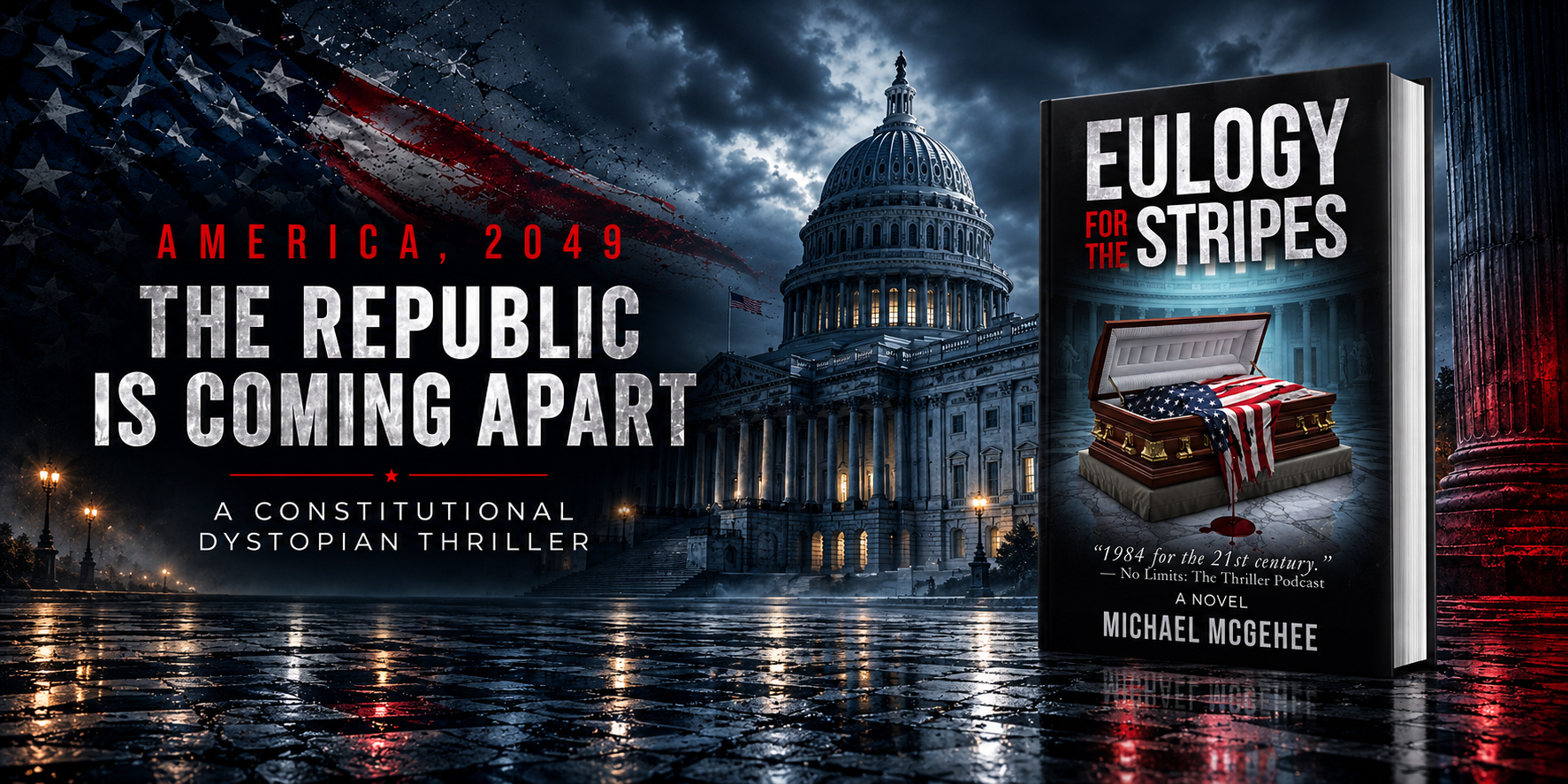
In my novel Eulogy for the Stripes, the reckoning simply unfolds. By 2049, the decline is complete because of consent. A society traded liberty for order, one reasonable choice at a time. Each decision made sense on its own. Together, they created a prison, and the wardens don’t live under the same prison and rules they themselves designed. Somehow, the elitists still obtain their Cuban cigars, right? Off camera, politicians remove their masks, knowing the blatant lies they just sold moments ago. Land near the water at Martha’s Vineyard remains highly sought after. They are not worried about their waterfront property being submerged by climate change. The powers that be all get their piece of the pie, and money is on them getting a far bigger slice than you.
By the time people realize what has been lost, stability blurs into control. Safety comes with conditions. Security requires obedience. There’s no dramatic moment when freedom disappears; only the eventual awareness that it’s been taken away.
You read about monsters in fiction, but sometimes the real ones are much more evil. They lay out policies, cite data, and promise protection. And once fear has done its job, there’s no clean way to go back.
Leave a Reply