

Dystopia is usually imagined as spectacle. War. Catastrophe. Collapse on a single date. History points to something quieter. Civilizations rarely break in one motion. They weaken through accumulation. Drift replaces rupture. Small exceptions become routine. Deferred costs become an inheritance.
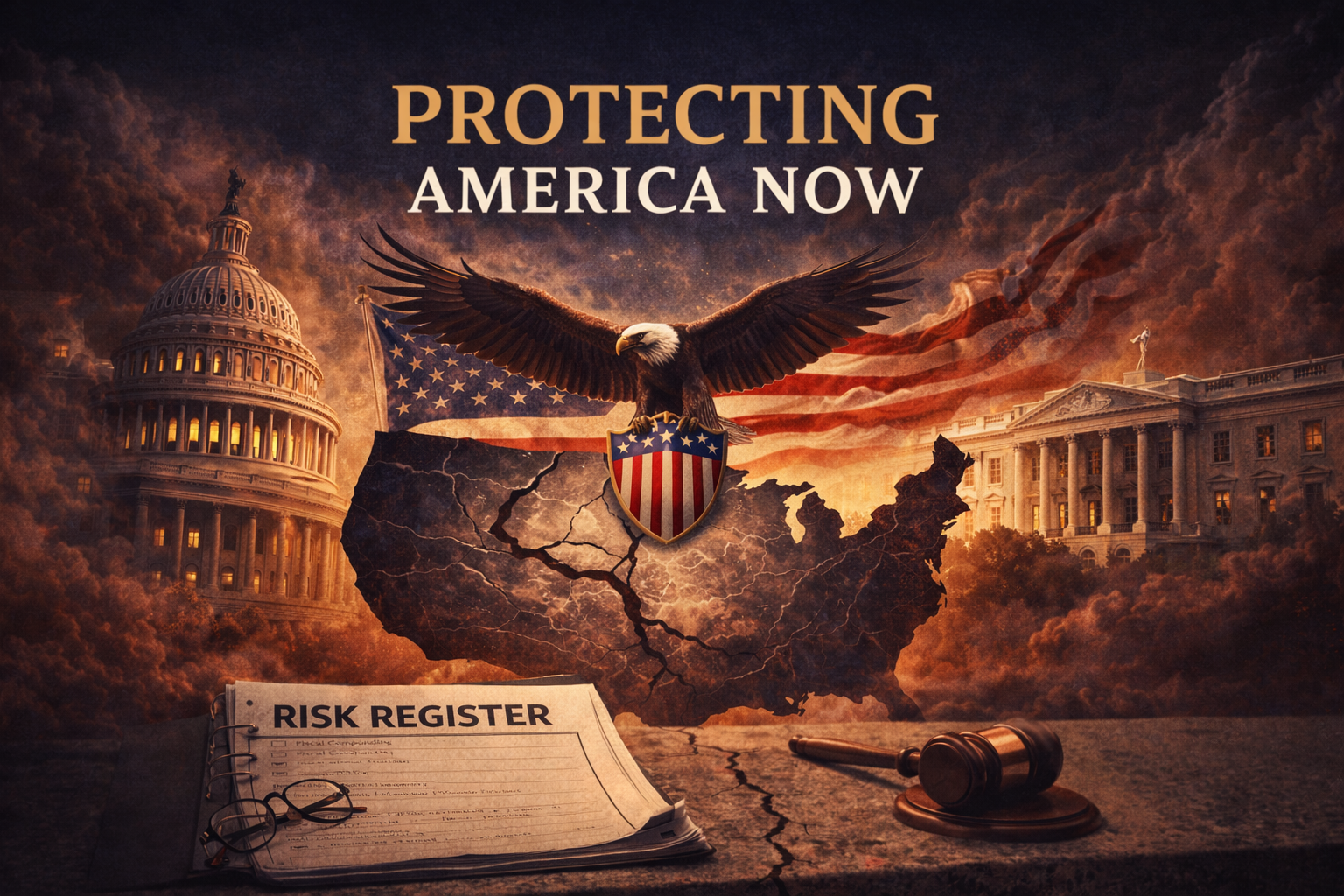
That’s why I’m going to CPAC to listen. The theme this year is “Protecting America Now.” Those words can mean a lot of things depending on who says them. The adult version of that theme is not a slogan. It’s stewardship. It’s the willingness to name risk without selling despair, and to protect the republic without treating politics like entertainment.
A serious movement should be able to state the risks plainly. Not as a prophecy. As a risk register. A map of where the floor can give way.
Here is mine, ranked.
1) Fiscal compounding
Debt is not only a number. It is a constraint. Interest isn’t ideology, it’s gravity. The more of your budget you dedicate to servicing old decisions, the fewer options remain for the next crisis. You lose margin. You lose agility. You become reactive by design.
2) Institutional trust decay
Institutions can continue operating even as legitimacy erodes. That is one of the most dangerous conditions a republic can enter. When trust collapses, the temptation becomes control. When confidence disappears, coercion becomes easier to justify. Systems still function, but they no longer command consent.
3) Political intimidation
A republic depends on speech, dissent, and the freedom to participate without fear. When intimidation becomes normalized, people self-censor. They withdraw. They stop engaging. The public square shrinks, and power consolidates not through a single tyrant, but through the quiet exit of ordinary people who decide it isn’t worth the risk.
4) Geopolitical escalation and miscalculation
Foreign conflict is never isolated. It creates second-order effects: energy shocks, supply chain disruptions, domestic polarization, and the kind of policy, “temporary measures,” that don’t always expire. Even when actions are taken for legitimate reasons, miscalculation can ignite a larger war rather than deter it.
5) Infrastructure fragility
Modern life runs on systems most people never see. Supply chains. Power. Water. Payments. The illusion of permanence comes from continuous motion, not deep resilience. A short disruption can create cascading scarcity. Scarcity changes behaviour. Behaviour changes politics. You don’t need collapse to feel it. You only need margins to thin.
6) Information integrity collapse
When truth becomes optional, governance becomes theatrical. Deepfakes, narrative warfare, and “my facts vs your facts” destroy the shared reality that makes compromise possible. In that environment, tribal loyalty replaces evidence. You can’t correct the course because you can’t agree on what’s happening.
7) Administrative overgrowth
Bureaucracy expands during stress. That’s normal. The danger is when rules replace judgment and process becomes a substitute for accountability. Friction accumulates. Capability shrinks. People become managers of paperwork rather than stewards of outcomes.
8) Cultural fragmentation
A healthy society can survive disagreement. It cannot survive the collapse of a shared story. When everything becomes a loyalty test, persuasion dies. When persuasion dies, force becomes tempting. This is not about a single ideology winning. It’s about a common ground disappearing.
9) Economic mobility squeeze
When people believe the future is closed to them, resentment becomes fuel. Extremism becomes a business model. People don’t need to be evil to become dangerous. They only need to feel trapped and unheard long enough.
10) Community weakening
The less local resilience exists, the more pressure shifts upward into national systems. That dependence is brittle. Communities that can’t absorb stress become dependent on institutions that are already strained. When both thin at once, the fracture becomes personal.
None of these risks requires a single villain. That’s the point. They emerge through incentives, avoidance, and time.
Protecting America now means restoring margins, keeping consequences close to decisions, and resisting the temptation to outsource responsibility. That posture is also the lens through which Eulogy for the Stripes is viewed. The story is not a complete fantasy. It is a cautionary tale built around the quiet stretch before the break, when people still have choices.
Risk is not destiny. But it is an indicator that action must be taken while we can still act.
Leave a Reply