
Last week, I wrote about the authoritarian uniparty as a pattern.
This week, I want to discuss the bill that pattern leaves behind.
America is nearing $39.26 trillion in national debt. That number is so enormous it almost loses meaning. It becomes something people hear, shake their heads at, and then move past because daily life is already expensive enough. Groceries are costly. Insurance is costly. Housing is costly. Energy is costly. Families are trying to survive the month, while Washington speaks in ten-year windows and budget baselines.
But debt is not abstract.
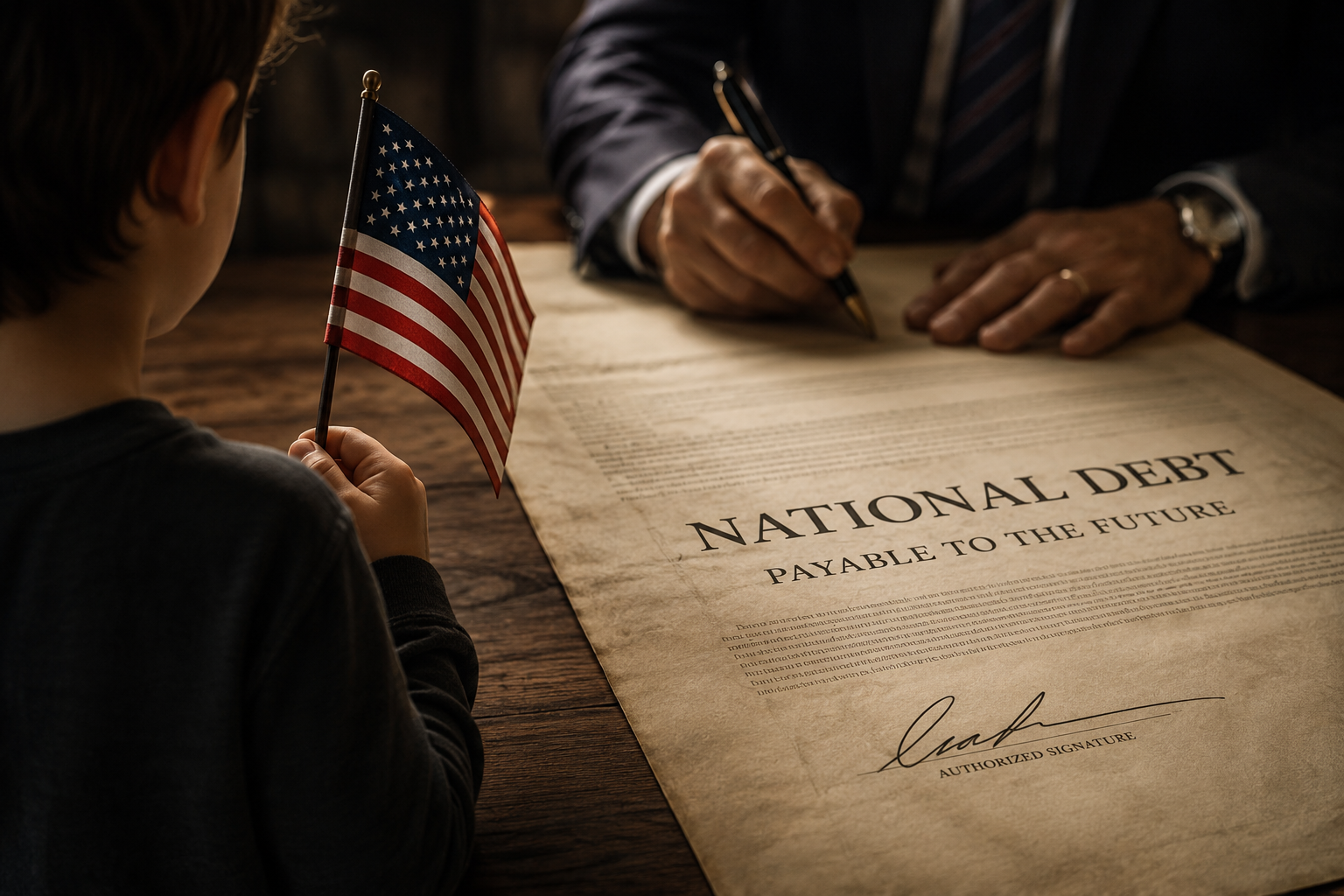
Debt isn’t just money borrowed from the future. It’s a discipline borrowed from people who did not agree to the bill.
That is the moral problem.
A nation can borrow during war, an emergency, or a genuine necessity. Serious countries sometimes must. But when borrowing becomes the operating system, something deeper is broken. The country stops making hard choices now and starts mortgaging the choices of children too young to object.
At that point, debt becomes more than a fiscal issue. It’s a trust issue.
The Congressional Budget Office projected a $1.9 trillion federal deficit for fiscal year 2026 and rising debt over the next decade, with net interest costs taking up a larger share of the economy. That means more money goes toward financing past decisions before the country even begins debating current needs.
When a nation spends more and more of its future just servicing yesterday’s choices, reality is no longer waiting politely. It is already at the door.
Not always through a dramatic crash. Sometimes, through fewer options, higher interest costs, more pressure on families, more reliance on centralized systems, more excuses for emergencies, and more temptation to manage the public instead of serving it.
That is where dystopian conditions start to form.
When a country refuses discipline long enough, leaders eventually seek control in the name of stability. They tell people that old freedoms are too inefficient, too risky, too messy, or too expensive for the crisis at hand.
But the crisis was not caused by freedom.
It was caused by pretending that we could postpone consequences forever.
America can still fix this. That remains true.
But fixing it requires honesty.
And honesty begins with admitting this:
A government that cannot control its appetite will eventually look for new ways to control its people.
Leave a Reply