

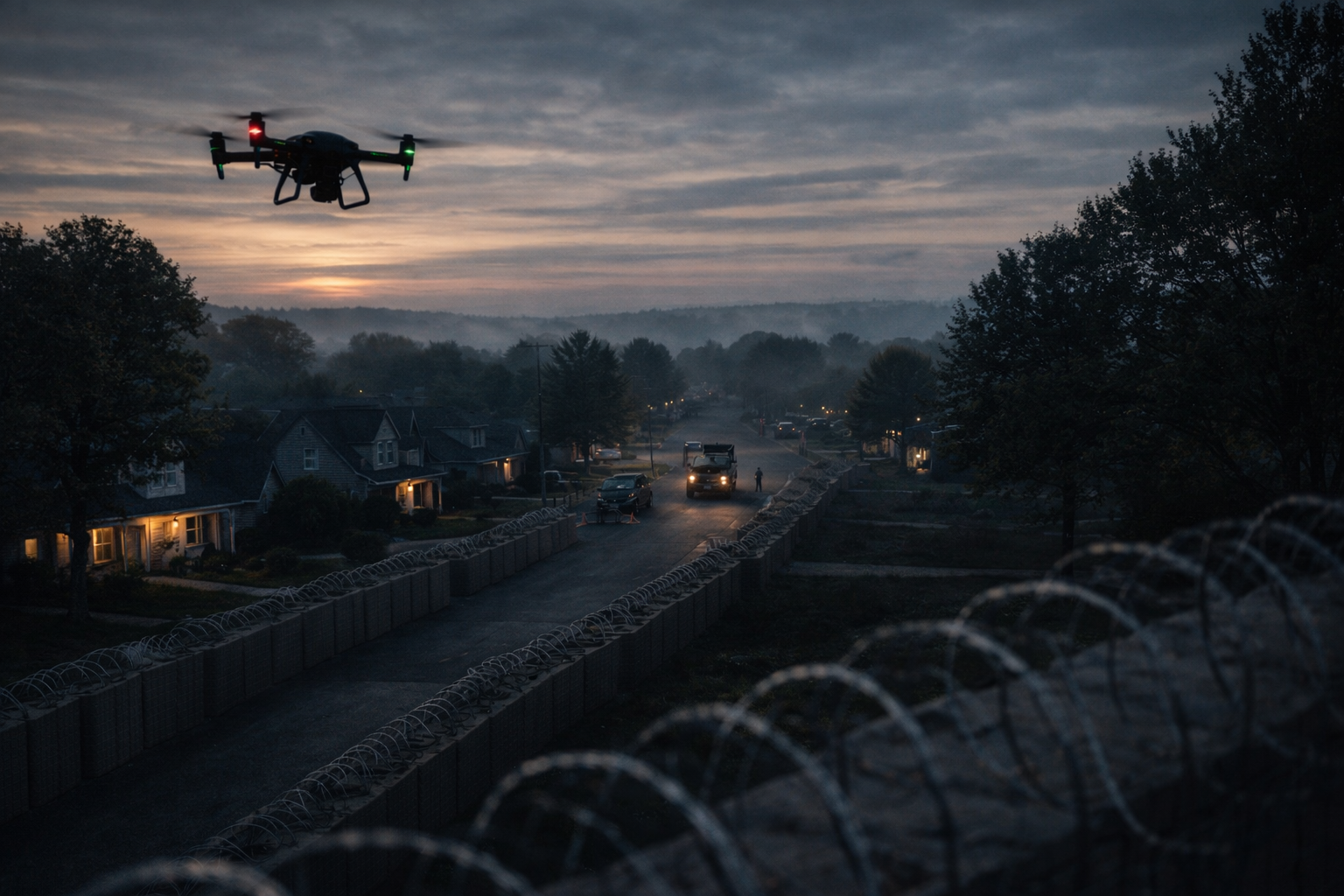
Anonymity did not vanish overnight. In the early internet, it was completely normal to exist without a public digital identity. Over time, that freedom flipped and gradually slipped. Visibility became valuable, and invisibility, once unremarkable, started to attract scrutiny.
Not long ago, this change felt subtle. Even as recently as 2018, before the world adjusted itself around lockdowns and remote work, daily life still had a physical side. Offices were visited. Interviews were held across conference tables rather than screens. Presence meant something real. A handshake, eye contact, and the subtle judgments made in shared space.
Today, absence speaks louder.
Being unseen on social platforms increasingly raises questions in ways that would have once seemed intrusive. No searchable footprint. No curated identity. No visible participation in the digital sphere. What once indicated privacy now risks being seen as concealment, disengagement, or irrelevance. The expectation has not been officially declared, yet it is widely understood.
Existence has become performative.
This change extends well beyond social signals. Beneath the surface, large streams of personal data are collected, grouped, and interpreted constantly. A largely cashless economy makes sure transactions leave permanent records. Loyalty programs, browsing histories, location services, and device identifiers compile detailed behavioural profiles. Convenience and personalization get better. So does visibility.
Smartphones now act as both tools and witnesses. Facial recognition, biometric locks, predictive text, and passive metadata collection create an architecture of constant verification. These systems are marketed as safeguards, and often they are. But their existence also normalizes a world in which verification comes before participation.
The trade feels fair because it rarely feels forced. You can refuse the terms and conditions, but then you won’t have the service.
New technologies deepen this trend. Drones, once new, now serve roles in logistics, mapping, agriculture, security, and infrastructure checking. Imaging technology capable of detecting heat signatures, movement patterns, and structural flaws continues to advance. Tools meant for safety, efficiency, and defence also redraw what can be observed.
The psychological adaptation is familiar: a dystopian surveillance state.
Societies have repeatedly absorbed new layers of monitoring when presented as protection. Airport scanners. Traffic cameras. Digital checkpoints are hidden in daily routines. Each step seems small. Each reason feels practical. Over time, the extraordinary becomes routine, then normal, then overlooked.
Anonymity usually doesn’t vanish through bans. It fades through disuse.
Eulogy for the Stripes fits into this tension. Not the spectacle of surveillance, but its normalization. Not the drama of control suddenly imposed, but the quiet reshaping of what people accept, trade, and eventually defend. The question isn’t who is watching, but when being unseen starts to feel incompatible with belonging.
Freedom doesn’t always shrink under pressure. Sometimes it narrows down to choices.
And often, by the time the change is widely noticed, it no longer feels like a change at all.
Leave a Reply