

If Part 1 was about where the idea began, this part is the prequel to the origin story.
Between 1998 and 2010, the story lived in fragments. Scenes. Settings. I pictured late-night television and grainy black-and-white moments where fear was suggested instead of sensationalized. Most of it played stealthily in the background while life moved forward: high school, military service, long stretches of work and training. It wasn’t a book yet. It was a set of moments that kept resurfacing.
Years went by. Work and everyday life took most of my attention. Still, every so often, I’d catch a news segment that echoed the story. I’d mention it to my dad in the living room, almost like a reminder to myself that it was still there.
Between 2007 and 2010, I lived in California. It could have been paradise if not for the policies shaping it. Beauty sat next to decay, and the contrast stayed with me. During those years, I kept crossing paths with people connected to horror, almost by accident.
I met Tony Todd, one of the kindest celebrities I’ve ever encountered. People remember him from Candyman, Final Destination, Night of the Living Dead (1990), and 24 (TV) as General Benjamin Juma. I remember how he treated people. When he passed, I didn’t replay the films. I thought about the man. Rest in peace, Tony.

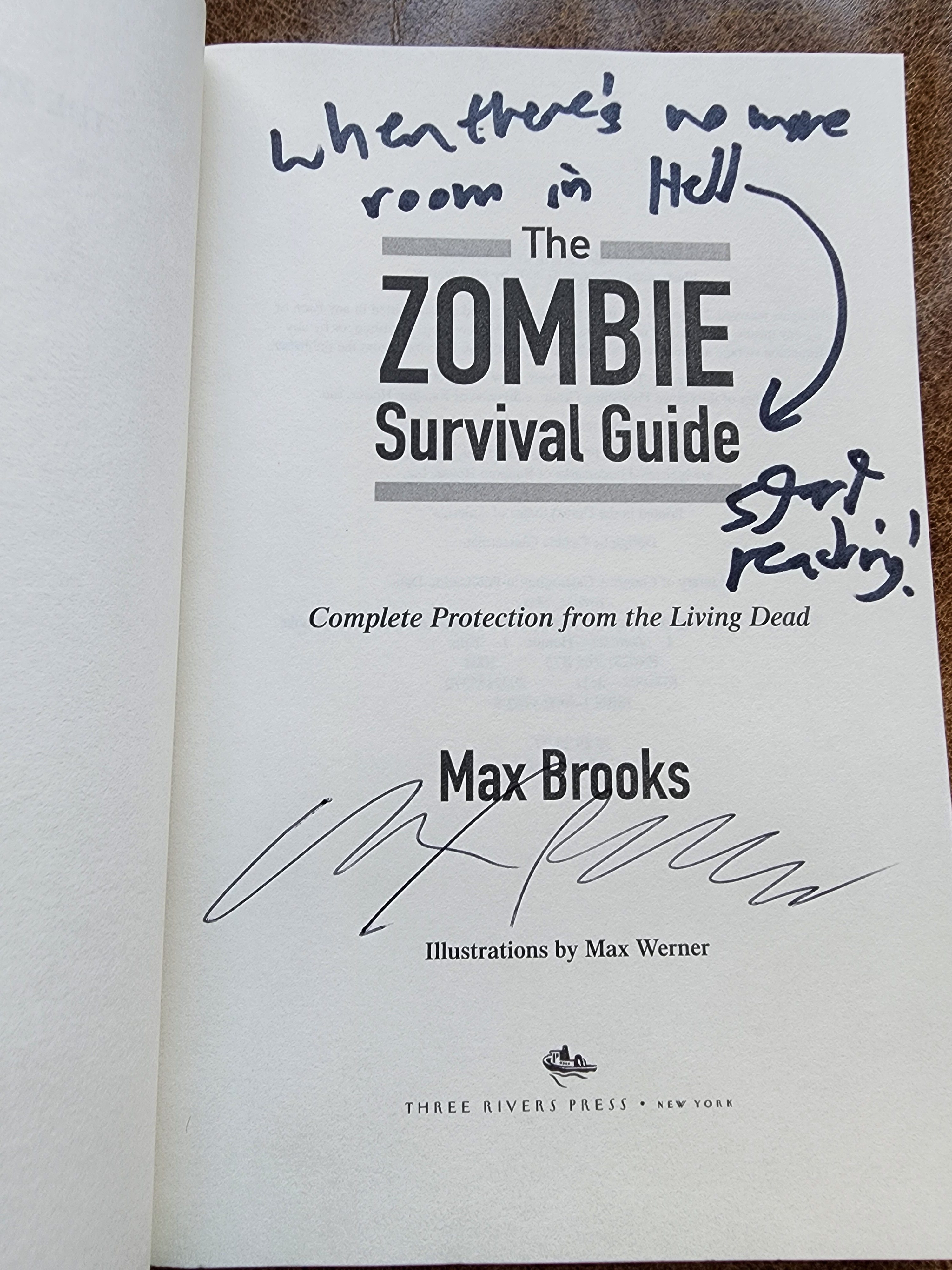
Around the same time, I met Max Brooks, author of World War Z. I went through the signing line three times. Not simply for the signatures, but to listen. To see how someone built worlds that could hold fear, consequence, and restraint at the same time. None of that turned me into a horror writer. Back then, it just felt like that’s where things were pointing.
From 2011 through 2019, life accelerated. I earned a master’s degree, stacked certifications, and worked in places where failure carries a cost. Consulting taught the same lesson again and again: systems work, until they don’t. And when they fail, people end up with the bill.
Sleep kept getting lighter. Dreams fewer. But when they came, they were sharp and difficult to shake. Border work. Pressure. Choices with no clean exits. I’d wake up wondering whether they were memory, imagination, or something in between.
Then COVID arrived, and the line between fiction and reality thinned. Institutions strained. Rules shifted. Arguments swallowed responsibility. The story changed with it, moving away from spectacle and toward something quieter and closer.
The first dream I had after COVID felt different. It was so vivid that I wrote it down before it faded. After the second dream, I realized it wasn’t horror anymore. It was closer to a dystopian thriller. So, I wrote. Proud Place stopped being an idea. This book isn’t about predicting collapse. It looks at the fragile space between stability and fracture, where ordinary families decide who they will be when certainty goes missing.
That’s where Eulogy for the Stripes found its voice.
And that’s where the real writing began…
Latest Transmissions
Essays, updates, and spoiler-free reflections on liberty, institutional failure, faith, family, fiction, and the pressures shaping the world of the novel.

August 2026: 2 Months into Eulogy for the Stripes
First, I want to thank everyone who has supported Eulogy for the Stripes since its release. Whether you have left a review, reached out to share your thoughts, talked about the novel,…
Read Transmission →
July 2026: Building the Foundation for What Comes Next
One of the most meaningful moments after the release was having the Eulogy for the Stripes cover custom-framed and hung in my office. A local framer helped turn the artwork into something…
Read Transmission →
Happy 250th Anniversary, America!
Today, I want to start by celebrating the 250th anniversary of the birth of the United States of America. Our nation has endured sacrifice, war, division, hardship, and renewal. Enough blood has…
Read Transmission →
Leave a Reply